Your First Korean Dermatology Visit: What to Expect Step by Step
Walking into a Korean dermatology clinic for the first time can feel intimidating, especially when you are navigating a different language and medical culture. But here is the good news: Korean dermatology clinics are among the most advanced and efficient in the world, and many are well-equipped to handle international patients. This guide walks you through every stage of your first Korean dermatology visit, from booking your appointment to walking out with a treatment plan.
Why Korean Dermatology Clinics Are Worth Visiting
South Korea has one of the highest concentrations of dermatology clinics per capita in the world. The Gangnam district alone has hundreds of skin clinics within walking distance. Korean dermatologists are trained in the latest procedures, from laser toning and Rejuran injections to Shurink ultrasound therapy, often at prices 30 to 70 percent lower than the same treatments in the United States or Europe.
Many clinics in Seoul actively cater to international visitors with English-speaking coordinators, multilingual consent forms, and streamlined processes. Clinics affiliated with major hospitals like Seoul National University Hospital even offer dedicated International Medical Centers with one-stop service covering everything from appointments to interpretation.
What to Bring: Your Document Checklist
Preparation is key for a smooth first visit. Here is what you should have on hand:
- Passport -- This is your primary form of identification at any Korean hospital or clinic. Hand it over at registration.
- Travel insurance documents -- Bring your policy number and an English-language copy of your coverage details. Some clinics can provide itemized English receipts for reimbursement claims later.
- Credit or debit card -- Visa and Mastercard are accepted nearly everywhere. Some clinics also accept international payment apps.
- Cash (Korean Won) -- Smaller clinics may prefer cash. ATMs that accept foreign cards are easy to find at convenience stores (GS25, CU, 7-Eleven).
- Current medication list -- Write down the names and dosages of any medications you currently take. An English list is fine, though a pharmacist can help translate if needed.
- Skin condition photos -- If your condition fluctuates (such as rashes or breakouts), take photos when symptoms are at their worst and show them to the doctor during your consultation.
- Minimal or no makeup -- Arrive with a clean face so the dermatologist can examine your skin accurately. Most clinics offer cleansing wipes at the front desk if you forget.
Step 1: Booking Your Appointment (예약 - yeyak)
Most Korean dermatology clinics accept walk-in patients, but booking ahead saves time. Here is how to make an appointment:
- Phone: Call the clinic directly. Many clinics in Gangnam and Apgujeong have English-speaking staff. Say: "Yeyak hago sipeoyo" (예약하고 싶어요) -- "I'd like to make a reservation."
- Online: Many clinics offer booking through Naver (Korea's main search engine), KakaoTalk, or their own websites. Some international-facing clinics accept bookings via email or Instagram DM.
- Medical tourism agencies: Services like Medical Korea (medicalkorea.or.kr) connect international patients with accredited clinics and can arrange interpretation.
Useful phrase: "Yeongeo doenayo?" (영어 되나요?) -- "Do you speak English?"
Step 2: Arrival and Registration (접수 - jeopsu)
When you arrive at the clinic, here is the typical flow:
- Remove your shoes at the entrance if you see a shoe rack or indoor slippers. Many clinics in Korea follow this practice for hygiene, though not all do. Look for visual cues near the door.
- Approach the front desk and present your passport. The receptionist will register you as a first-time patient (chojin, 초진).
- Fill out the intake form (munjinpyo, 문진표). This questionnaire covers your medical history, allergies, current medications, and the reason for your visit. Larger clinics provide English versions. If yours does not, the staff can help you fill it in.
- Wait in the lobby. Korean clinic wait times are generally shorter than Western hospitals. Expect 10 to 30 minutes depending on how busy it is.
Cultural tip: A slight bow when greeting the receptionist is appreciated but not required. A simple "Annyeonghaseyo" (안녕하세요 -- Hello) goes a long way.
Step 3: The Consultation (진료 - jillyo)
Korean dermatology consultations tend to be efficient and highly visual. Here is what happens:
- Visual examination: Dermatology in Korea relies heavily on sijin (시진), which means visual diagnosis. The doctor will closely examine your skin, often using a magnifying lamp or dermoscope.
- Discussion: The dermatologist will ask about your concerns, symptoms, and goals. If there is a language barrier, many clinics have a coordinator or nurse who translates in real time.
- Skin analysis: Some clinics use digital skin analysis machines that scan your face for pigmentation depth, pore size, moisture levels, and UV damage. This is common even at neighborhood clinics.
- Treatment recommendation: Based on the examination, the doctor will recommend a treatment plan. They will explain the procedure, expected results, recovery time, and price.
Useful phrases:
- "Yeogi-ga geokjeongdwaeyo" (여기가 걱정돼요) -- "I'm concerned about this area."
- "Tongjeung-i isseoyo" (통증이 있어요) -- "I have pain."
- "Allergy-ga isseoyo" (알러지가 있어요) -- "I have allergies."
What to expect culturally: Korean doctors tend to be direct and concise. Consultations may feel faster than what you are used to at home, sometimes lasting only 5 to 10 minutes. This is normal -- it reflects efficiency, not a lack of care.
Step 4: Treatment (시술 - sisul)
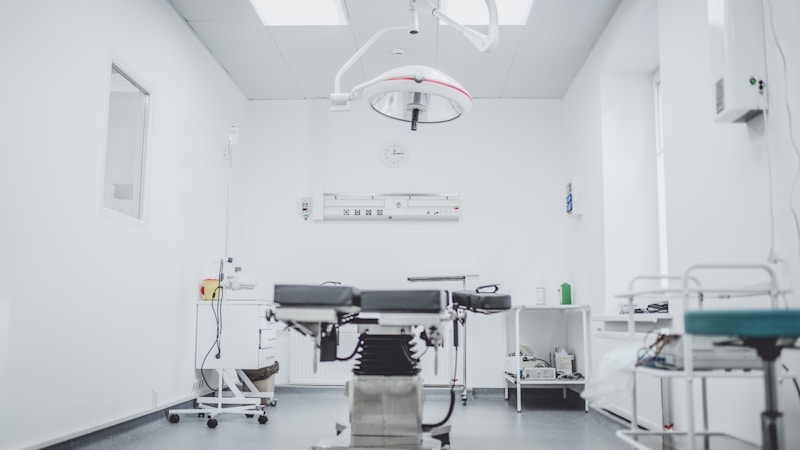
If you agree to a procedure on the same day (many treatments can be done immediately), a nurse will guide you to the treatment room:
- Numbing cream: For procedures like laser treatments or injections, numbing cream is applied 20 to 40 minutes beforehand.
- The procedure: Korean clinics are equipped with the latest technology. The dermatologist or a trained nurse will perform the treatment. Common first-visit procedures include laser toning, chemical peels, and hydra facials.
- Aftercare instructions: The staff will explain post-treatment care, often with a printed handout. Ask for an English version or take photos of the Korean instructions to translate later.
Useful phrase: "Apeulkkayo?" (아플까요?) -- "Will it hurt?"
Step 5: Payment and Checkout (수납 - sunap)
After your consultation or treatment, head to the payment counter:
- Pricing: Korean dermatology visits are affordable compared to Western countries. A basic consultation at a private clinic costs around 10,000 to 30,000 KRW ($8 to $23 USD). Cosmetic treatments are additional and vary widely by procedure.
- Payment methods: Credit cards, debit cards, and cash are all accepted. Major international cards work at most clinics.
- Receipts: Request an English itemized receipt (yeongmun yeongsujung, 영문 영수증) if you plan to file an insurance claim at home.
- Prescriptions: If the doctor prescribes medication, you will receive a prescription slip (cheobangcheon, 처방전). Take it to any nearby pharmacy (yagguk, 약국) to pick up your medicine. Pharmacies are found on nearly every block in Seoul.
Useful phrase: "Yeongmun yeongsujung juseyo" (영문 영수증 주세요) -- "Please give me an English receipt."
Essential Korean Phrases for Your Visit
| English | Korean | Pronunciation |
|---|---|---|
| Hello | 안녕하세요 | Annyeonghaseyo |
| I'd like to make a reservation | 예약하고 싶어요 | Yeyak hago sipeoyo |
| First visit | 초진 | Chojin |
| Do you speak English? | 영어 되나요? | Yeongeo doenayo? |
| I have sensitive skin | 민감성 피부예요 | Mingamseong pibuyeyo |
| How much does it cost? | 얼마예요? | Eolmayeyo? |
| It hurts here | 여기 아파요 | Yeogi apayo |
| Thank you | 감사합니다 | Gamsahamnida |
| Please give me a receipt | 영수증 주세요 | Yeongsujung juseyo |
| Pharmacy | 약국 | Yagguk |
Insider Tips for a Great Experience
- Go on weekdays. Korean clinics are busiest on Saturday mornings and Monday afternoons. Midweek mornings offer the shortest wait times.
- Check for JCI accreditation. Clinics with Joint Commission International certification meet global patient safety standards. The Korean government also runs its own hospital accreditation system through the Ministry of Health and Welfare.
- Use the Medical Korea Information Center. Call 1577-7129 for free medical interpretation in 10 languages, including English, Japanese, Chinese, Russian, and Arabic.
- Look for the right signage. A board-certified dermatologist's clinic will display "OOO Pibugwa Uiwon" (OOO 피부과 의원). If you see the dermatology specialty listed in small text below the clinic name, the doctor may not be a dermatology specialist.
- Plan recovery time. If you are getting a procedure, avoid scheduling sightseeing immediately after. Some treatments cause temporary redness or sensitivity to sunlight.
FAQ
Q: Do I need a visa specifically for medical treatment? A: For visits under 90 days, most nationalities can use a standard tourist visa or visa-free entry. A dedicated medical visa (C-3-3) is available but not required for short treatments. Korean clinics can treat patients regardless of visa type.
Q: Will the doctor speak English? A: Many clinics in areas popular with tourists (Gangnam, Apgujeong, Myeongdong) have English-speaking doctors or coordinators. Call ahead and ask "Yeongeo doenayo?" to confirm.
Q: Can I get treatment on my first visit? A: Yes. Many procedures, including laser treatments, peels, and injections, can be performed on the same day as your consultation. More complex treatments may require a follow-up appointment.
Q: How much should I budget for a first visit? A: A consultation alone typically costs $8 to $23 USD. If you add a treatment such as laser toning or a hydra facial, expect to pay $75 to $300 USD depending on the procedure. Korean prices are significantly lower than comparable treatments in the US.
Q: Do Korean clinics accept international health insurance? A: Most private clinics do not bill international insurance directly. However, they can provide English itemized receipts and medical records for you to submit a claim to your insurer at home.
Q: Should I tip the staff? A: No. Tipping is not part of Korean culture and is not expected at medical facilities. A polite "Gamsahamnida" (thank you) is the best way to show appreciation.
Conclusion
Your first Korean dermatology visit does not have to be stressful. Korean clinics are efficient, well-equipped, and increasingly international-friendly. Bring your passport, arrive with a clean face, and do not be afraid to ask questions. With world-class treatments at a fraction of Western prices, it is easy to see why millions of international visitors are choosing Seoul for their skincare needs.
Ready to book your first appointment? Start by researching clinics in the Gangnam or Apgujeong areas, where English support is most widely available.
Last Updated: February 2026 Reading Time: 7 minutes